

Luggage OEM/ODM(MOQ: 300–500 pcs | Lead Time: 40–60 days | OEM & ODM | AQL QC Standards)

We offer full OEM/ODM luggage solutions with competitive pricing, reliable capacity, and strict quality control designed for international buyers.
1. Preparation Phase
1.1 Design and Concept
You must provide clear design drawings and specifications, including external and internal dimensions, compartment layouts, materials, and required surface finishes.
Please supply the correct Pantone colour codes to ensure precise colour matching during production.
We shall commence project scheduling based on your design documentation and requirements.
1.2 3D Modelling and Mould Development
Step 1: Our design team will create a 3D model of the luggage based on your drawings.
Upon completion of the 3D model, we will render images and send them to you for confirmation.
Following your approval, we will commence mould making. The mould production cycle depends on the complexity of the case.
Important Note: Please ensure your design files are finalised before moulding commences. Once moulds are produced, any alterations will render existing moulds unusable, necessitating new moulds at additional cost.

1.3 Materials and Shell Moulding
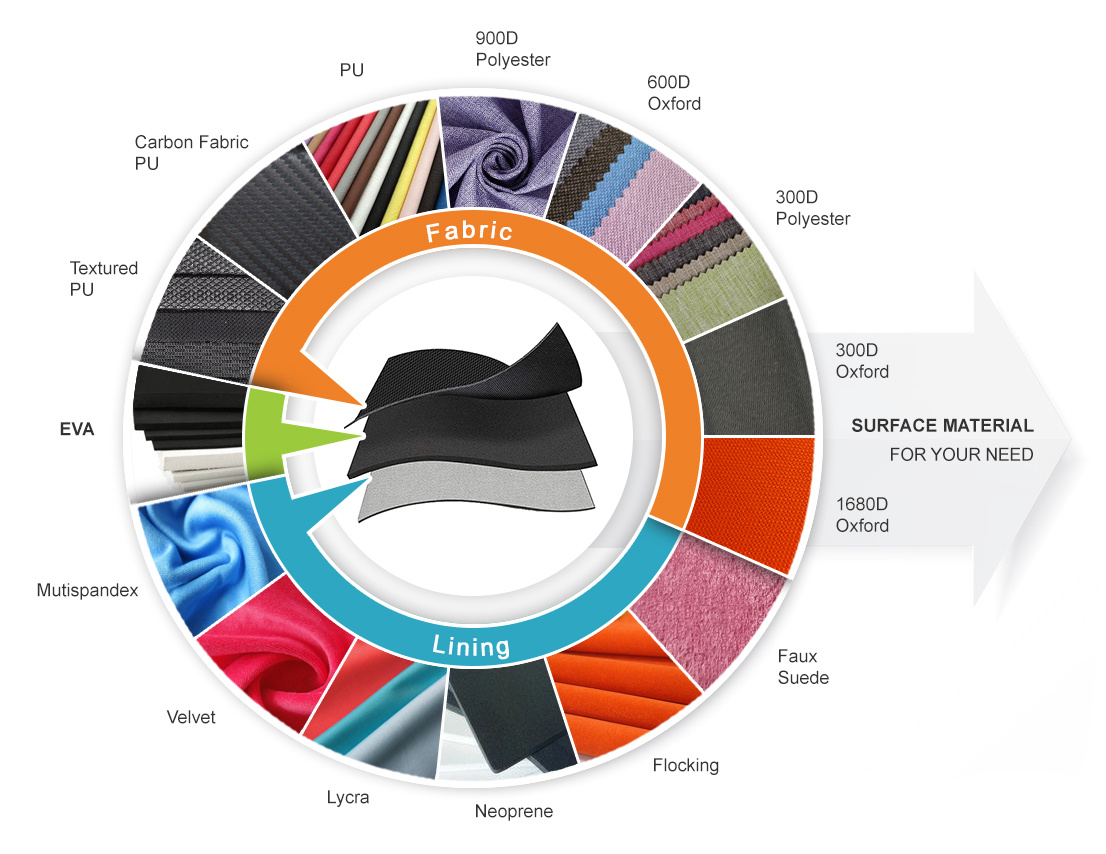
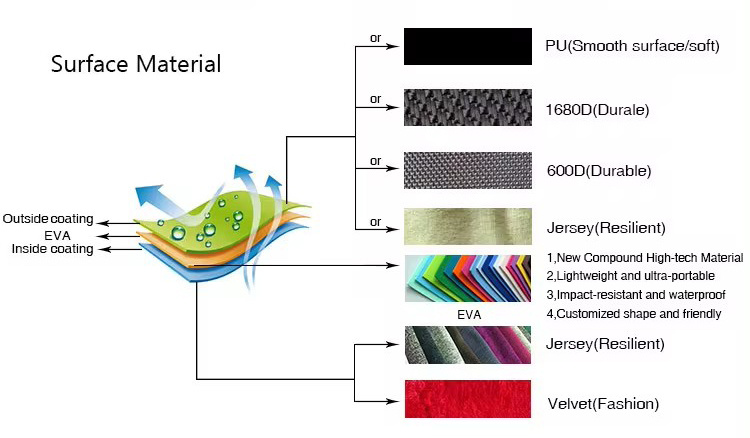
Upon mould completion, we proceed with shell moulding: materials are selected according to your specifications and design.
Common materials for hard-shell luggage include PP and ABS, with PU occasionally used (for overmoulding or soft-touch surface treatments).
*PP offers lightweight, flexible, and durable properties.
*ABS is cost-effective and easy to colour, though its impact resistance may be slightly inferior to premium materials.
*PU is typically employed for soft-sided luggage or as a surface treatment layer, rather than as the primary shell material; when used in hard-shell cases, it is generally applied for texturing/laminating purposes rather than as the structural shell.
We commence the shell moulding process using the mould (injection moulding or vacuum forming), proceed with colouring (matching your Pantone colour reference), and then assemble the two shell components.
2. Production Phase
2.1 Production Planning
We undertake capacity planning based on your order volume: encompassing machine allocation, staffing arrangements, and batch scheduling.
The production process comprises the following stages:
Shell moulding → Shell finishing/colouring → Lining and fittings assembly → Handle/wheel assembly → Final inspection.
2.2 Shell Cutting/Forming
Depending on the material, we employ injection moulding (typically for PP materials) or vacuum/pressure forming (typically for ABS, PC materials).
Shell blanks undergo trimming after forming and are prepared for assembly.
During shell forming, accessories such as wheels, telescopic handles, and corner guards are simultaneously prepared for installation.

2.3 Component and Fittings Assembly
Production of interior lining fabrics, internal dividers, straps, compression panels and other components.
Installation of handles and hardware (zippers, locks, telescopic systems).
Should PU coating, embossing or texturing be specified, this is completed at this stage.

2.4 Final Assembly
Assemble the moulded shell blanks, internal components, and hardware fittings.
The assembly process includes: securing wheels, installing handle systems, fitting zippers, affixing brand identifiers/logos, and sealing shell edges.
Final finishing touches comprise trimming seam lines, removing burrs, smoothing edges, and verifying colour and surface treatments meet specifications.
2.5 Quality Inspection
We conduct structural testing: drop tests, shell impact tests, and wheel/handle durability tests.
Visual inspection: shell surface finish, colour accuracy (Pantone colour matching), branding, and lining cleanliness.
Dimensional inspection: ensuring overall dimensions comply with your drawings and any airline/regulatory requirements.
Packaging inspection: ensuring no residues, dust, or production debris remain.

3. Post-Production Stage
3.1 Cleaning and Packaging
Each product undergoes thorough cleaning to ensure freedom from dust and loose threads.
Packaging is executed according to your bespoke specifications: plastic bags, dust covers, cardboard boxes, custom hangtags, and branded cards.
3.2 Storage and Transportation
Finished goods are stored by batch in designated locations with inventory records maintained.
Arrange logistics per your preference: sea freight, air freight, or courier. Pre-shipment checks verify quantity, model, and packaging labelling accuracy.
3.3 After-Sales Service
We maintain contact to gather usage and performance feedback.
We maintain issue logs for continuous production process refinement.
Any quality issues trigger repairs/replacements or process improvements
4. Material Guide and Considerations
Key points and considerations for materials commonly used in hard-shell luggage manufacturing:
*PP (Polypropylene)
Lightweight and flexible, suitable for frequent travellers prioritising luggage weight.
Resistant to low temperatures and certain chemicals.
However, surfaces are more prone to scratching compared to harder materials.
Moulding costs are higher during injection moulding, but scrap rates are lower.
*ABS (Acrylonitrile Butadiene Styrene)
An economical choice offering good formability and diverse colour options.
*Lower impact resistance than PP or PC; more susceptible to damage under extreme loads.
A suitable option where cost control is paramount and usage frequency is moderate.
*PU (Polyurethane)
Typically employed for overlays, soft-touch finishes, or soft-shell luggage rather than primary rigid shells.
Delivers premium texture and comfortable tactility, though improper application may increase costs and reduce structural rigidity.
Additional Considerations:
Colour Matching: If specific Pantone colours are required, ensure the resin or shell coating process supports precise pigment matching.
Forming Methods: Injection moulding versus vacuum forming impacts shell strength, weight, cost, and scrap generation.
Sustainability: Materials like RPET or recycled shells are gaining traction in the market.

5.Quick Custom Luggage Process:
• Submit design & specs
• Material selection & 3D modelling
• Sample approval & tooling
• Mass production with QC checkpoints
• Packaging & delivery
Luggage Case
Our Factory
Dear Customer
Our head office in Dongguan oversees centralized production management, quality control, and project coordination. Supported by partner factories in Guangzhou, Shenzhen, and Huizhou, we maintain strong manufacturing capability across multiple product categories. To enhance flexibility and optimize logistics and tariff preferences for global clients, we also work with certified production partners in Vietnam and Cambodia. This diversified supply chain enables us to deliver reliable capacity, competitive cost structures, and on-time fulfillment for both large-volume and multi-category orders.
We specialize in producing custom-made bags and luggage for international brands, including:
• Backpacks: travel, sports, business, and outdoor styles
• Tote bags, duffel bags, cosmetic bags, cooler bags
• Suitcases and trolley luggage
We provide complete OEM and ODM solutions. Our services cover design consultation, material development, sampling, engineering refinement, mass production, and packaging. With an experienced R&D and manufacturing team, we help clients turn concepts into high-quality products that strengthen brand identity and improve market performance.
By integrating our resources across China, Vietnam, and Cambodia, we offer flexible and scalable production options to meet the diverse needs of global markets.
Warm regards
Letong company

Inquiry Now


Copyright © 2024 Dongguan Letong handbags co.,ltd
Privacy Policy | SEO | CitySite Support: 300.cn Dongguan